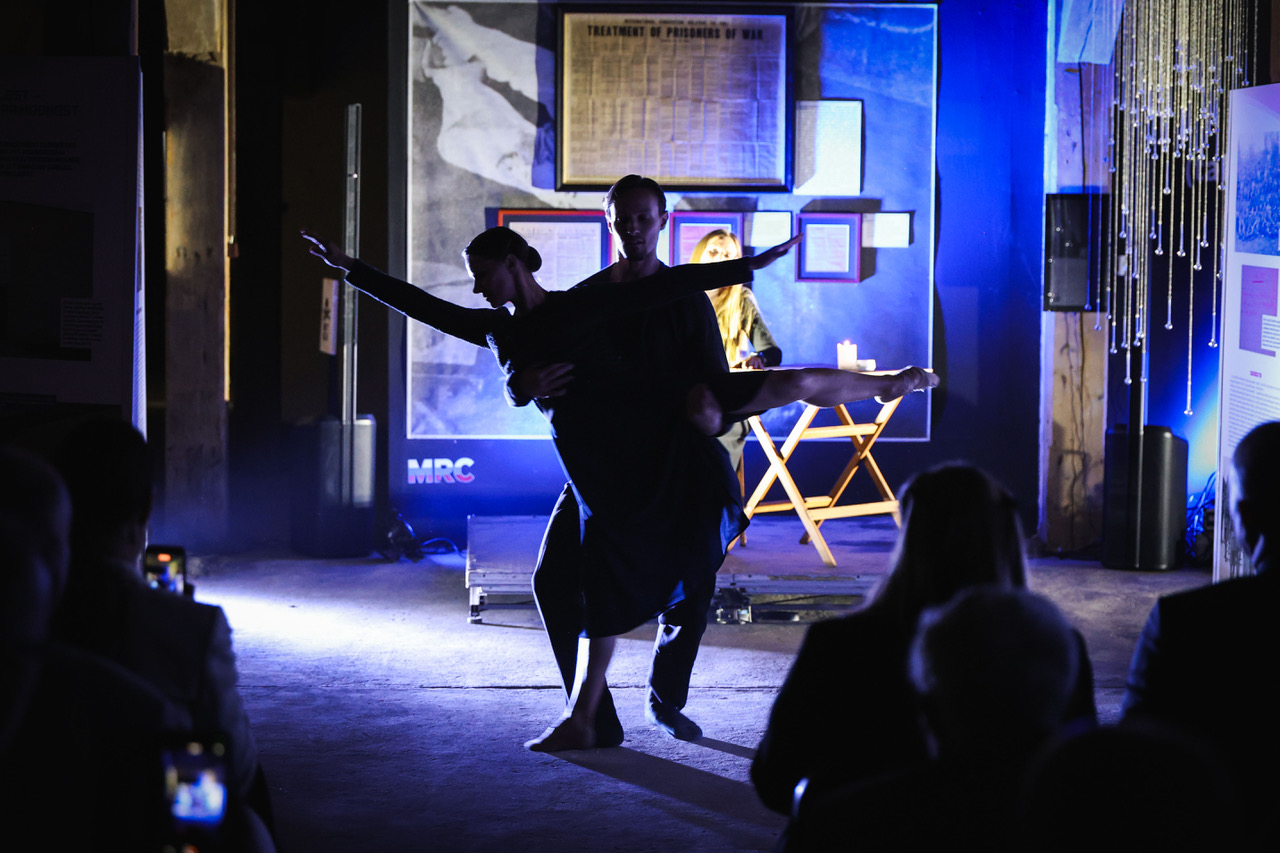
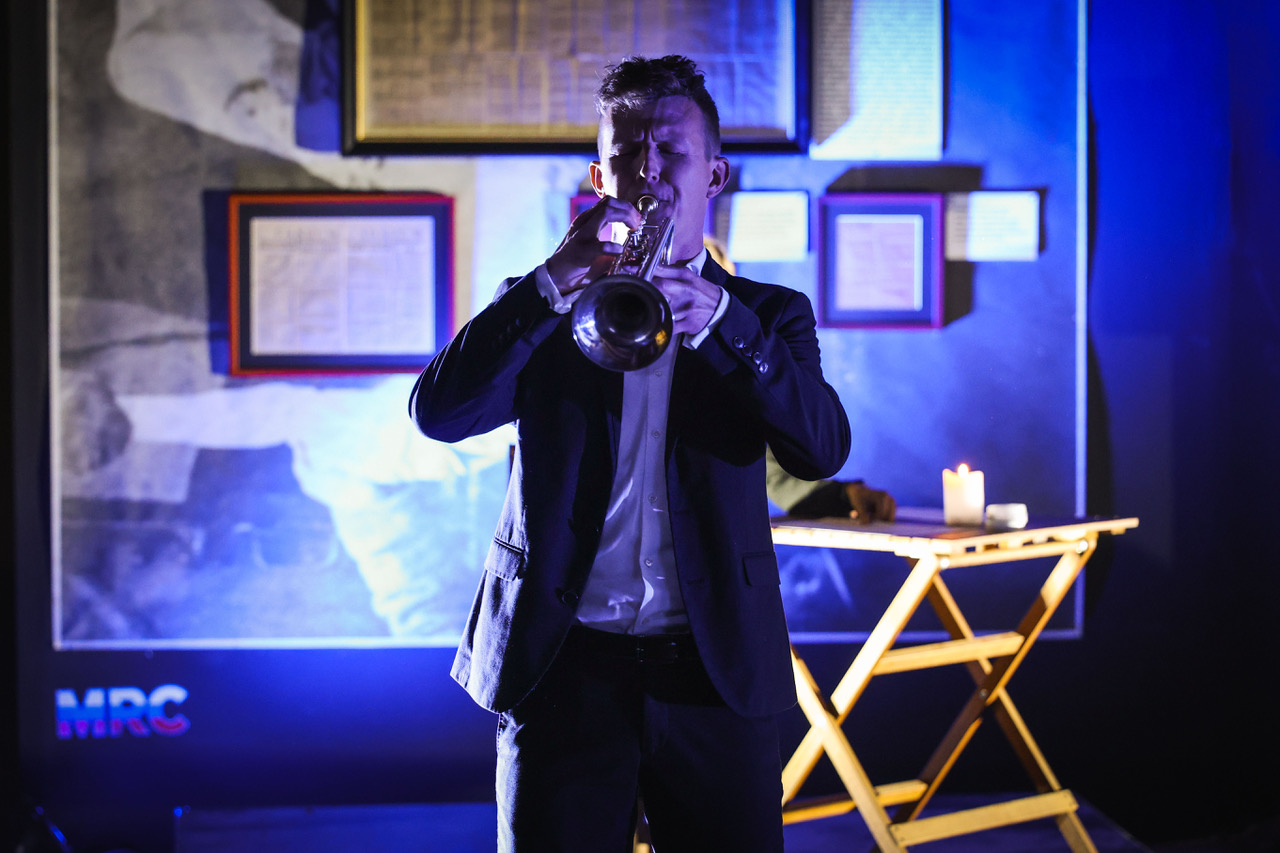
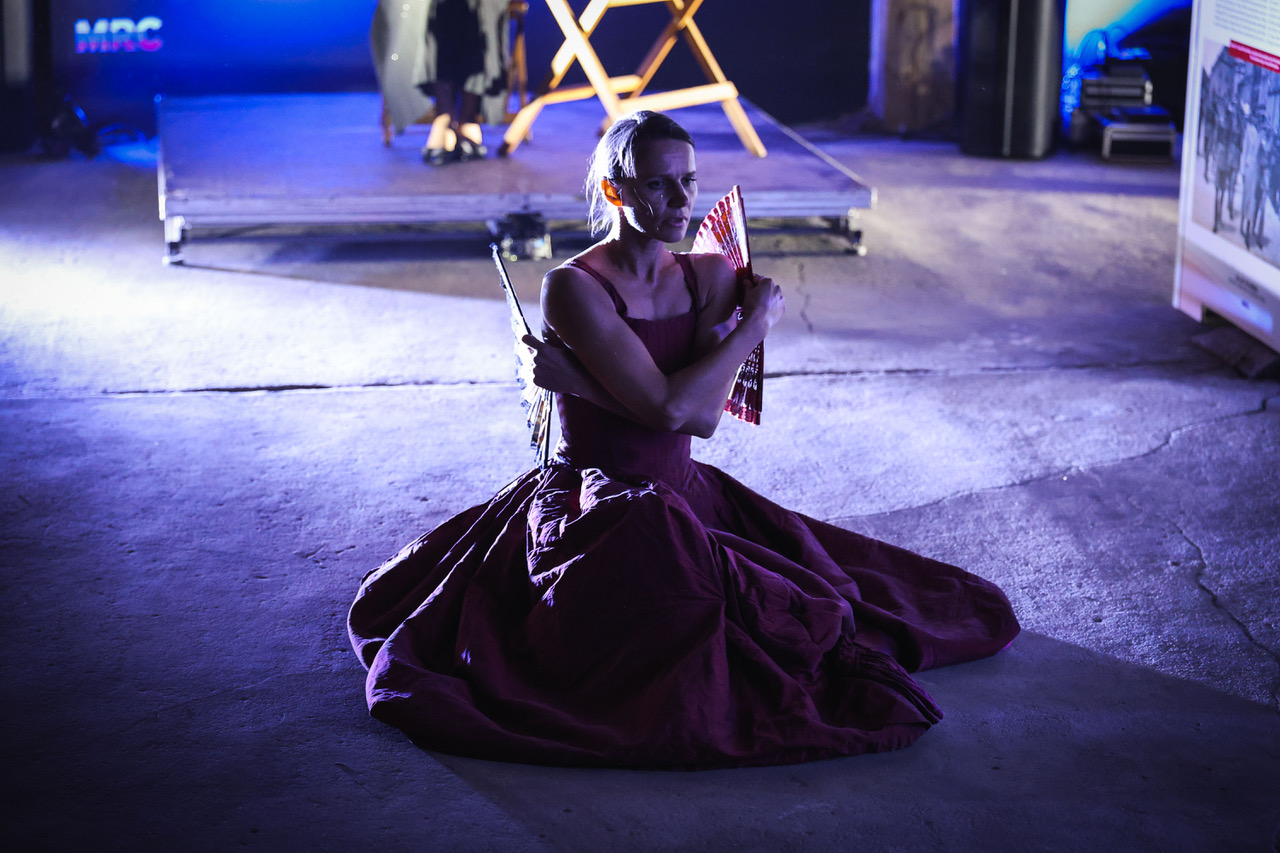
On Friday, 8.5., on the eve of Victory Day and the Liberation of Maribor, an event entitled “Art without Borders” was held at the Museum of the Nazi Prisoner of War Camp Stalag XVIII D, which was enriched with recitals, music and ballet. Numerous artists interwoven memories of the most difficult times of the prisoners and their hope for survival and freedom with excellent cultural performances. The well-attended central celebration was organized by the International World War II Research Center Maribor (MRC). Before the event itself, the Ambassador of the Russian Federation to Slovenia Timur Eyvazov and representatives of the MRC laid wreaths in front of the former camp.
The keynote speaker, Ambassador of the Russian Federation to Slovenia Timur Eyvazov, said in Slovenian: “We are marking a great historical day when peace returned to Europe, as the greatest evil in human history, Nazism and fascism, was defeated. The Soviet Union paid the highest price for this with 27 million dead on the fronts and in camps. The Great Patriotic War, which lasted four years for us, caused deep losses and unhealable wounds, as the Nazis and their collaborators committed genocide. They wanted to turn our territories into their lebensraum, in which they would destroy Slavs, Jews, Asians…” He added that a total of around 15 thousand prisoners of war suffered in the Maribor camp, which operated from June 1941 to October 1942, including five thousand captured Red Army soldiers, thousands of whom were also left to die or killed.
Researcher at Alma Mater Europaea University and MRC Maribor, Assoc. Prof. Dr. In his speech, he emphasized to Daniel Sitar: “In the city that plunged Europe and the world into new devastation, the darkest human chapter formally ended on European soil 81 years ago. More than 60 million dead. The Soviet Union alone lost at least 27 million people, of which at least 3.5 million in Nazi prison camps. Nazi-fascism was defeated on that May day in 1945, its tentacles pushed deep underground, but its ideological roots unfortunately survived. And they still live on. The work of the MRC Maribor as one of the most important defenders of preserving the historical message in this part of Europe, based on primary research, therefore has no time limit. The faces from photographs, data from the registration camp cards of the killed Soviet soldiers in this part of the camp, and our educational exhibitions testify to the horrors, immense suffering, torture, and abuse. These faces are not just numbers – they are a reminder of what happens when human life loses its value.”
The Ambassador also presented certificates of appreciation and recognition to the MRC staff for their “noble work”, including the Secretary General of the Center Iza Verdel, who led the event in the absence of Director Janez Ujčič, and historians Assoc. Prof. Dr. Daniel Sitar, a researcher at the Alma Mater Europaea University and MRC Maribor, and the Director of the Maribor Jewish Cultural Heritage Center Boris Hajdinjak.
Before the celebration, the premises of the terrible death camp were ritually cleansed by Orthodox priest Vjačeslav. A moving cultural program was then performed by Špela Pokeržnik, a recital and singing, opera tenor Tim Ribič, who sang the famous Katjuša in Russian and Slovenian, trumpeter Leon Pokeržnik, and a magnificent ballet performance was provided by champions of the Slovenian National Ballet Maribor Tijuana Križman Hudernik and Davide Buffon. Visitors were also able to see an art exhibition, which presented paintings by children from Saratov, Russia, with portraits of their ancestors who participated in the Great War.
“Only by constantly warning, preventing the distortion of historical facts and spreading knowledge, and by working together, can we prevent the rise of extreme neo-Nazi ideologies. The responsibility stems from yesterday, but it is on all of us today, here and tomorrow.”